Crystal Guide · Crystal Basics
Can You Wear Crystals in the Shower? A Stone-by-Stone Guide
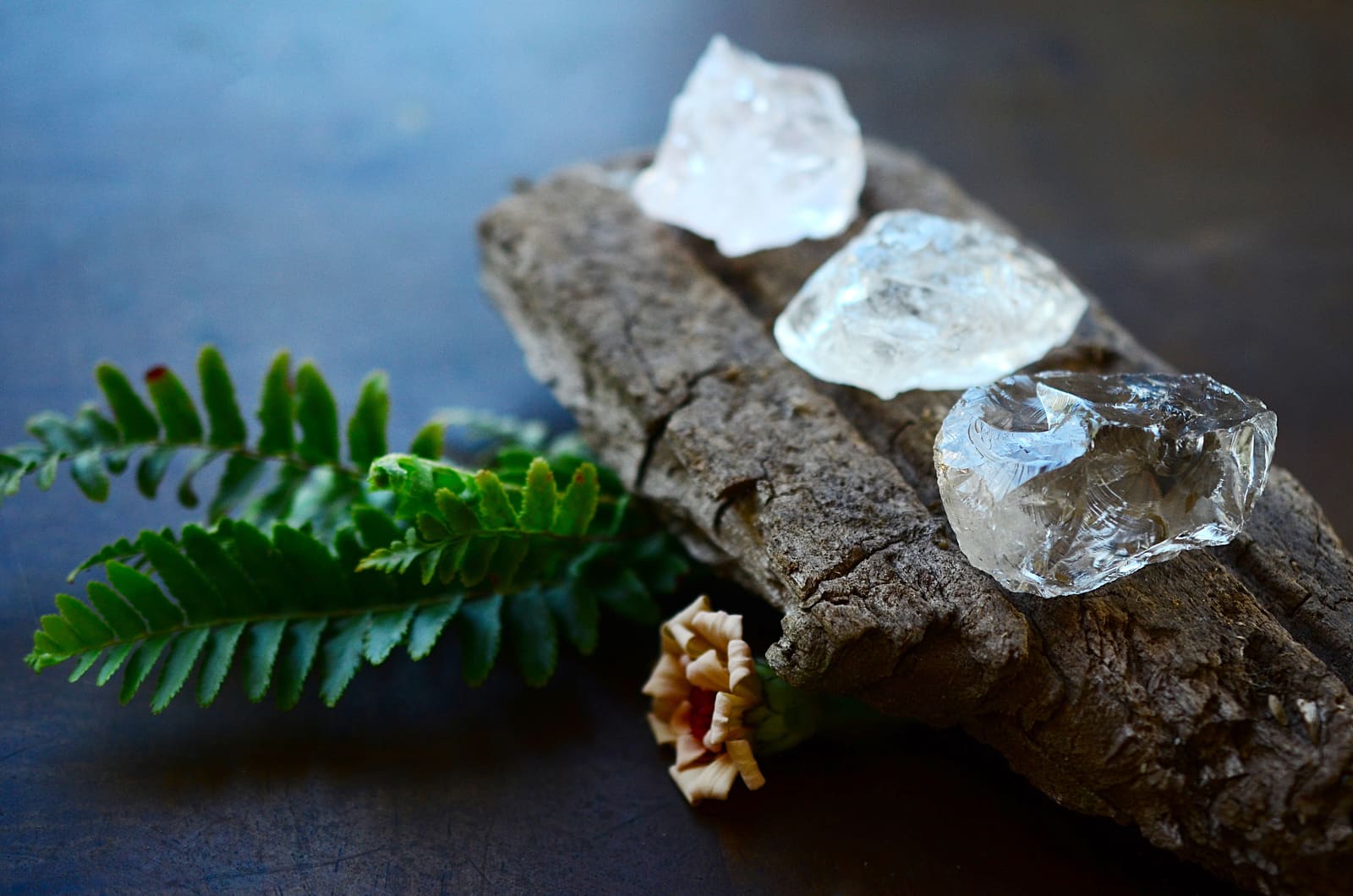
Short answer: it depends entirely on the stone. Hard, non-porous crystals like clear quartz, amethyst and citrine are generally fine with brief water exposure. Soft or porous stones like selenite, malachite and turquoise are not — some dull, some dissolve, and a couple release substances you don't want on your skin or down the drain. When in doubt, take it off.
This comes up constantly with bracelets especially, since a bracelet is the piece most likely to still be on your wrist when you jump in the shower without thinking. Here's the actual answer, stone by stone, rather than a blanket "never" that isn't quite true or a blanket "always fine" that definitely isn't.
Generally fine with brief water contact
- Clear Quartz, Amethyst, Citrine, Smoky Quartz — all forms of quartz, hard (7 on the Mohs scale) and non-porous. Brief contact is fine; long soaking or very hot water repeatedly can still stress a piece over time.
- Tiger Eye, Jasper, Agate — hard, dense stones that tolerate water well.
- Black Tourmaline, Garnet — hard and stable.
Best kept dry
- Selenite — this is the big one. Selenite is a form of gypsum and is genuinely water-soluble; it can start to dissolve, cloud or flake with real water exposure. Keep it dry, full stop.
- Turquoise, Malachite, Larimar — porous stones that can absorb water, soap and skin oils, which dulls their colour and finish permanently over time.
- Lepidolite, Fluorite — softer stones (Mohs 3–4) that can be scratched or etched by prolonged water and soap contact.
- Anything dyed — dye can leach or fade with water exposure, which is one more reason to know what you're actually wearing (see our guide on telling natural from dyed or heated crystals).
One real safety note: Malachite
Malachite contains copper carbonate, and its dust is toxic if inhaled or ingested in quantity. This matters mainly for cutting, polishing or grinding raw malachite, not for wearing a finished, sealed piece — but it's worth knowing if you ever handle raw malachite yourself, and it's a reason to always wash hands after handling raw specimens generally, not just this one.
Jess's note: if you're not sure what a piece is made of, ask before you swim, shower or wash dishes in it — it's a five-second question and it's the difference between a bracelet that lasts years and one that clouds over in a month.
A simple rule if you don't want to memorise the list
Harder, non-porous, undyed stones (most quartz varieties) tolerate brief water contact. Anything soft, porous, dyed, or that you can't identify with confidence — take it off first. When genuinely unsure, treat it like fine jewellery you'd remove before washing up: better safe than sorry, and it costs you nothing to check.
Common questions
Can I wear my crystal bracelet swimming?
For hard, non-porous stones like quartz varieties, a quick swim is generally fine, though chlorine and salt water are harsher than fresh water and can dull a finish over repeated exposure. Porous or soft stones should come off first.
Will water damage a crystal bracelet permanently?
It depends on the stone — see the lists above. Selenite is the clearest case of real, sometimes visible damage. Most quartz-family stones handle occasional water fine.
How do I know what my bracelet is made of if I'm not sure?
Ask us — we can tell you from a photo or in person, and it's worth knowing anyway for cleaning and care. See our guide on telling natural, dyed and heated crystals apart for what to look for yourself.
Four minutes walk from Chinatown MRT
Mon–Fri 11am–7pm · Sat 11am–4pm · Sun by appointment
WhatsApp 9728 8112
Part of our Crystal Guide — read the full section for more depth.