Crystal Guide · Metaphysical & Healing
Crystals for Anxiety and Stress: What People Actually Reach For
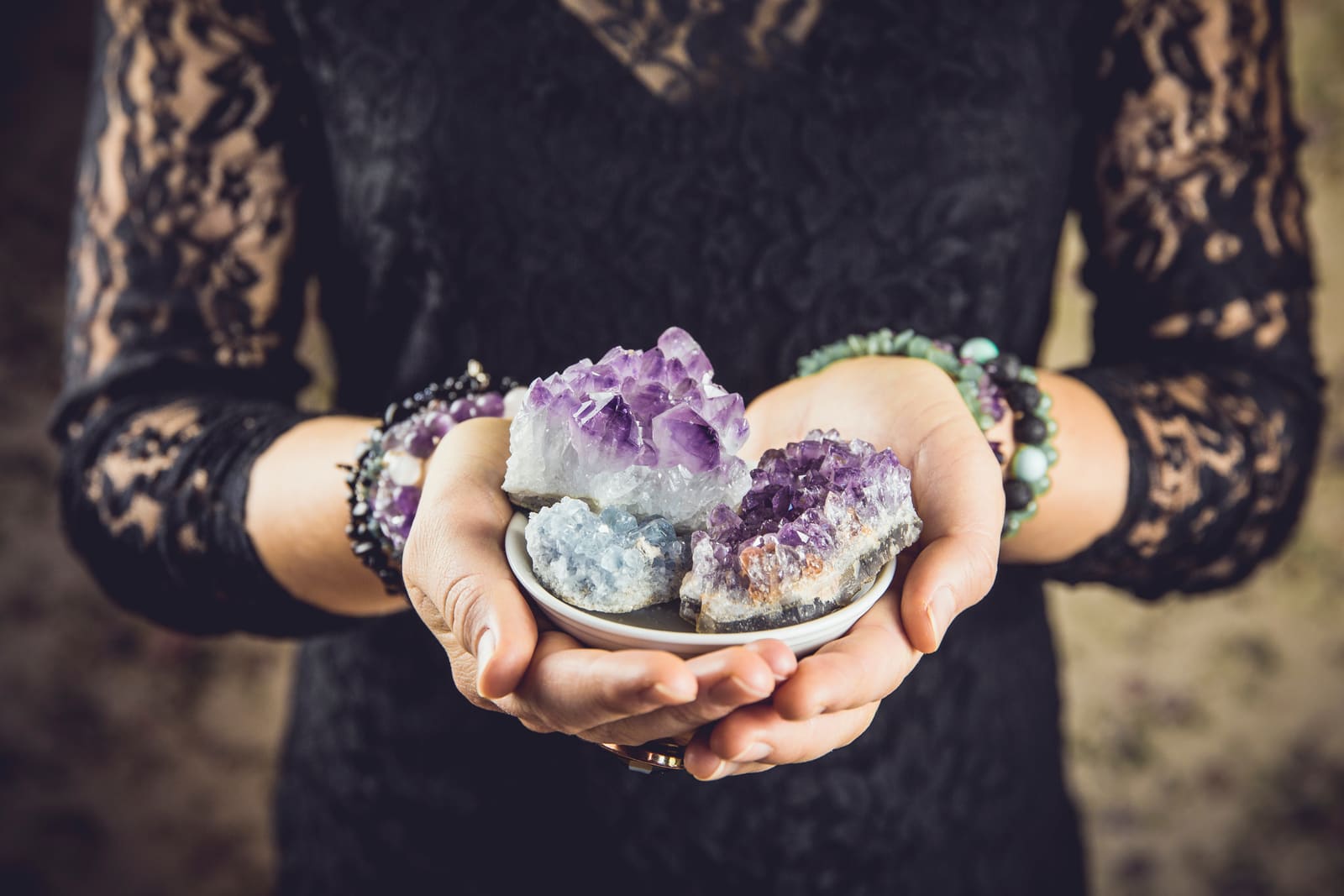
Amethyst, Rose Quartz, Lepidolite and Blue Lace Agate are the stones people most often reach for during a stressful stretch — worn as a bracelet, carried in a pocket, or kept by the bed. None of this replaces medical or mental health care; it's a traditional practice some people find genuinely grounding alongside whatever else they're doing to look after themselves.
A quick honest note before the list: we're a crystal shop, not a clinic, and we're not going to tell you a stone treats anxiety. What we can tell you is which stones people traditionally reach for and why — and if what you're carrying is genuinely affecting your day-to-day life, a GP or counsellor is the right first call, not a bracelet.
The stones people reach for most
- Amethyst — the classic calming stone. Associated with quieting an overactive mind and supporting restful sleep; often kept on a nightstand or worn as a pendant close to the Third Eye.
- Rose Quartz — softer, heart-centred calm rather than sharp focus — associated with self-soothing and emotional steadiness rather than just romantic love, despite the reputation.
- Lepidolite — contains lithium in its natural mineral form, which is part of why it has a long folk association with calm (note: this is a traditional association, not a claim that wearing it has a pharmacological effect).
- Blue Lace Agate — a gentle, pale blue stone associated with easing anxious or racing thoughts, often worn at the throat.
- Black Tourmaline / Smoky Quartz — for a different kind of stress: the grounding, "get out of my head and back into my body" kind, rather than the racing-thoughts kind.
How people actually use them
Most people don't do anything elaborate. A bracelet worn daily so it's there when you notice you need it. A palm stone in a desk drawer, held for a minute during a bad meeting. A piece by the bed for the nights sleep doesn't come easy. The stone isn't doing the work by itself — it's a physical anchor for the moment you choose to pause, which for a lot of people is the actually useful part.
Jess's note: the customers who come back and tell us a piece "actually helped" almost always describe using it this way — as a prompt to pause and breathe, not as something that works while they ignore everything else going on. That's a reasonable way to think about it.
Common questions
Can crystals cure anxiety?
No, and we won't tell you they can. Crystals are a traditional, personal practice some people find grounding — they are not a medical treatment. If anxiety is affecting your daily life, please speak to a GP or mental health professional.
Which crystal is best for sleep specifically?
Amethyst is the one most commonly associated with restful sleep in crystal tradition — many people keep a piece on their nightstand rather than wearing it. See our Crystal Guide for cleansing and care once you have one.
Do I need to wear it constantly for it to help?
No — most people describe the piece as useful in the specific moment they notice they need it, whether that's daily wear or picking it up occasionally. There's no fixed rule.
Four minutes walk from Chinatown MRT
Mon–Fri 11am–7pm · Sat 11am–4pm · Sun by appointment
WhatsApp 9728 8112
Part of our Crystal Guide — read the full section for more depth.